Rider’s Guide to Choosing a Comfortable Aftermarket Motorcycle Seat
A bad seat doesn’t just ruin a ride; it ends one. Every mile on a hard, worn-out stock seat is a battle against back pain, numb legs, and constant shifting just to find a sliver of relief. The right aftermarket seat changes all of that. It turns a grueling stretch of highway into the kind of ride that gets talked about for years.
Table of Contents
Viking Bags, a best-in-class motorcycle luggage and aftermarket parts maker trusted by riders across the globe, has built an entire line of motorcycle seats designed to solve the exact problems that factory seats create. Known widely for premium saddlebags and storage systems, Viking Bags has brought the same standard of craftsmanship to seats built for real roads and real miles.
Choosing the right aftermarket seat takes more than a quick scroll through product pages. There are materials, shapes, foam types, fitment specs, and riding styles all worth thinking through. Continue reading to get a full breakdown of every factor that matters when picking the best aftermarket motorcycle seat, and how to match it to any riding style.
1. Why Stock Seats Let Riders Down
Motorcycle makers build to a price. That means factory seats are engineered for cost, not comfort. The foam is often thin and low-density, the shape is a one-size-fits-most compromise, and the cover material barely holds up to a single season of sun and rain.
For a 20-minute commute, a stock seat works fine. Push past 60 or 90 minutes, and the problems start to surface fast. Common issues include:
- Thin foam that collapses early: Factory foam compresses quickly under rider weight and loses its shape after a few thousand miles. Once the foam bottoms out, the rider is essentially sitting on the metal seat pan.
- Generic seat shapes: A flat, wide seat pan puts pressure on the tailbone and inner thighs. Without contouring, there are no natural pressure zones to shift weight between.
- Weak cover materials: Budget vinyl cracks and fades under UV exposure. After a wet season, the stitching splits and the cover bubbles.
- No lower-back support: Most stock seats offer no rise or contour at the rear of the rider section. Over long highway miles, the lower back takes the full hit.
- Poor passenger zones: On bikes with a combined rider-passenger seat, the rear section is often an afterthought, narrow, flat, and lacking padding.
These aren’t minor annoyances. They’re the reason so many riders upgrade their seats within the first year.
2. The Key Factors to Consider Before Buying
2.1 Foam Type and Density
Foam is the core of any seat. The difference between a good seat and a great one often comes down to what is inside.
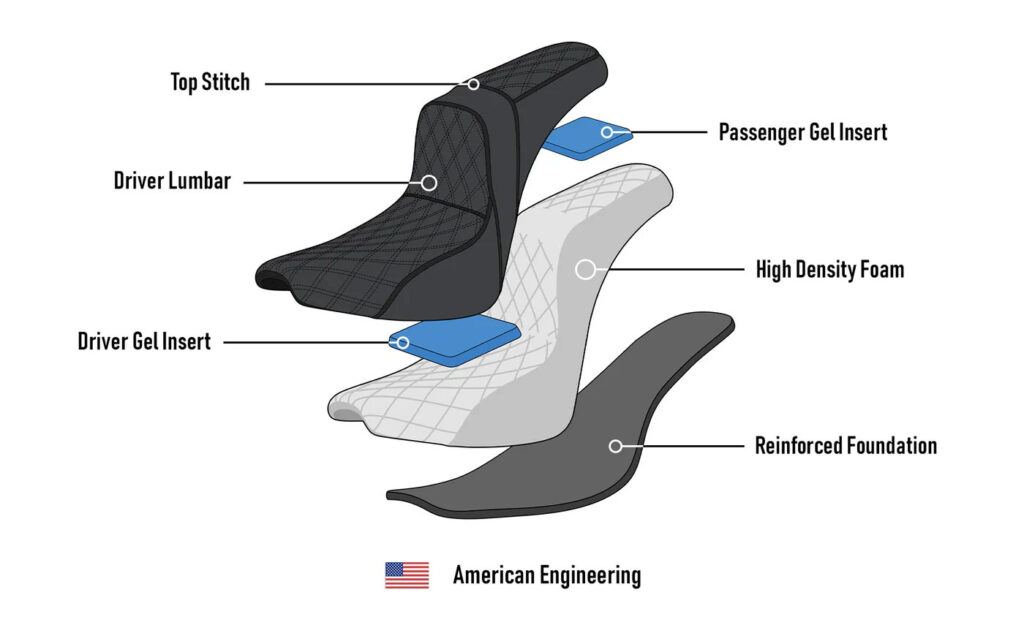
Standard PU foam works for moderate rides. For longer ones, gel-infused PU foam is worth the upgrade. Gel technology spreads pressure across a wider surface, reducing the hotspots that cause fatigue and soreness on long stretches. The ideal setup is a layered system, a firm base layer for stability and support, and a softer gel-infused top layer for comfort.
The Viking Iron Born Diamond Stitch 2-Up Seat is a good example of this done right. It uses PU foam with gel technology and includes separate gel pads for both the rider and passenger. This is especially useful on long highway rides where foam alone would compress and lose its shape long before the destination is reached.
2.2 Seat Shape and Profile
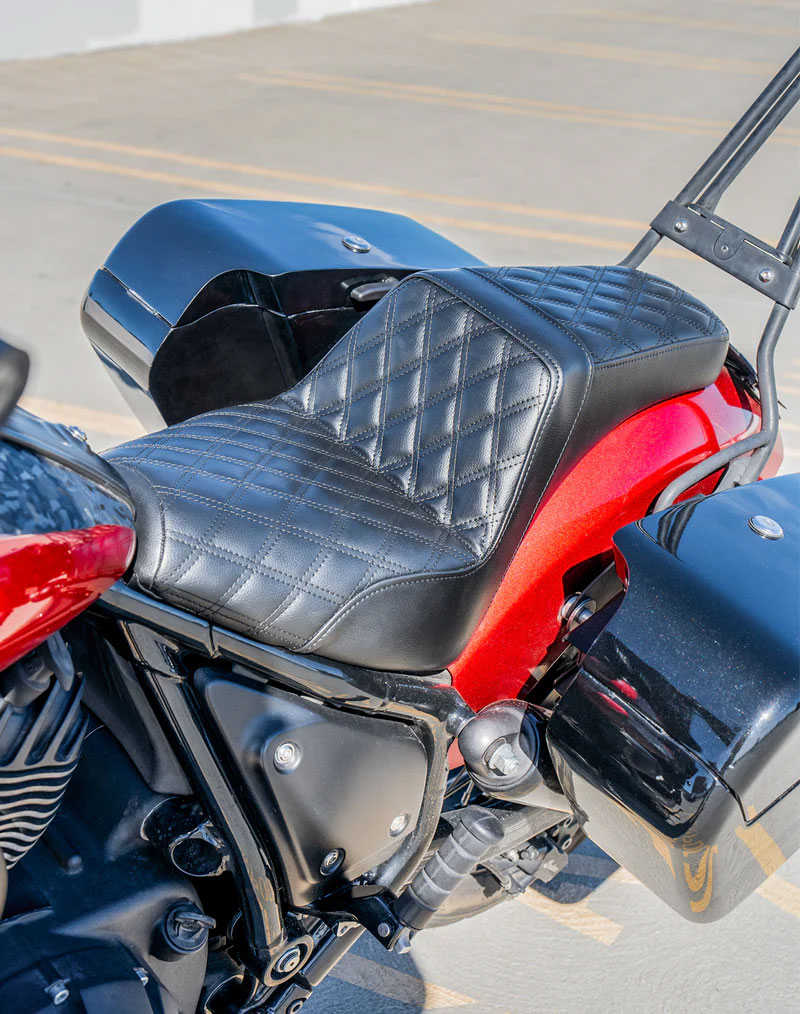
Seat shape has a direct effect on how a rider sits, how their feet reach the ground, and how well control is maintained in corners. Key things to evaluate:
- Front nose width: A narrower nose lowers the seat height slightly and lets riders plant their feet more flat at stops. This matters most on taller bikes.
- Mid-section width: The widest point of the seat is where most of the rider’s weight sits. A wider mid-section spreads that load more evenly.
- Step-up vs. flat design: A step-up seat has a raised rear section for passengers. This keeps the rider from being pushed forward during braking and gives the passenger a clearly defined space. Flat seats work fine for solo riding, but can feel crowded with a passenger.
- Lower-back support: Some seats include a slight rise at the rear of the rider zone that braces the lumbar region. This becomes a real difference-maker after two or three hours on the highway.
2.3 Cover Material and Weather Resistance
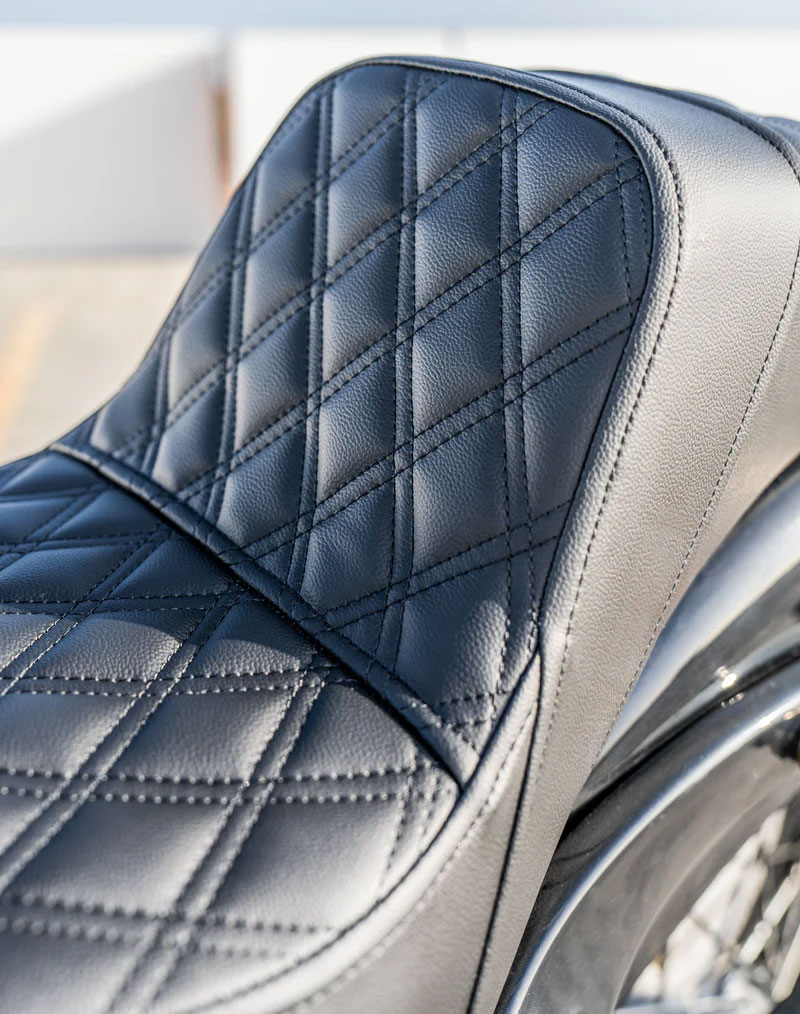
The cover is the first thing rain, sun, and heat hit. PVC leather is one of the most reliable options available, tough, easy to clean, and resistant to cracking under UV exposure. It also holds stitching patterns well, which is why it’s often used on seats with diamond-stitch designs.
Look for tight, even stitching across the entire cover. Loose stitching around the edges is a sign of poor build quality and will split open faster under stress.
2.4 Fitment and Mounting Hardware
A seat must fit the specific bike, not just look like it does. Universal seats often leave gaps near the gas tank or fail to align with mounting points. A model-specific seat bolts on cleanly, sits flush, and doesn’t rock or shift under load.
Hard-mount systems are more stable than strap or hook systems. Seats that include all mounting hardware save time and keep installation clean and secure.
2.5 Passenger Comfort
For two-up riding, the passenger’s experience matters as much as the rider’s. A wide, padded rear section with a step-up design keeps the passenger comfortable and stable through long stretches, braking zones, and sweeping corners.
3. Types of Aftermarket Motorcycle Seats
Not all riders need the same seat. Here’s a quick breakdown of the main types:
- Solo seats: Sleek and low-profile. Popular on bobbers and choppers. Built for single riders who want a clean, custom look without bulk.
- 2-up seats: Designed for rider and passenger together. A good 2-up seat has a defined rider zone, lower-back support, and a wide padded rear section.
- Touring seats: Thick, wide, and sometimes paired with armrests or back supports. Built for maximum comfort over 500+ mile days.
- Gel seats: Not a distinct style but a comfort category. Gel-infused foam is available in solo and 2-up designs and is worth seeking out for any ride over an hour.
4. A Closer Look: Viking Iron Born Diamond Stitch 2-Up Seat for 2018+ Harley Softail Street Bob FXBB/S
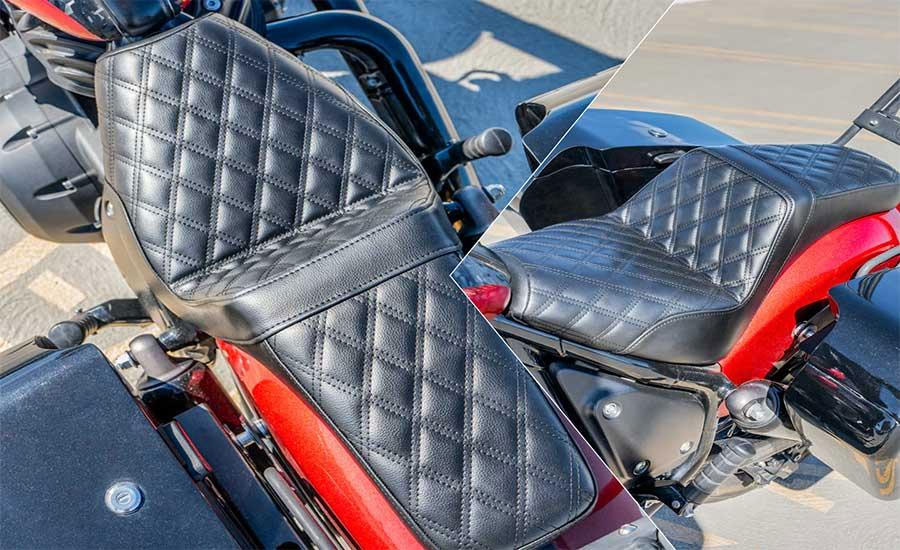
For riders on a 2018 or later Harley Softail Street Bob, the Viking Iron Born Diamond Stitch 2-Up Seat is one of the most complete seats on the market right now. Viking Bags, one of the best motorcycle parts makers available today, built this seat with real touring comfort in mind and wrapped it in a style that suits the Street Bob’s aggressive cruiser profile.
Here is what makes it worth a close look:
- Step-up 2-up design: The raised rear section gives the passenger a higher perch while the rider gets a clearly defined seat zone with built-in lower-back support. This setup makes a real difference on long highway miles.
- Gel-infused PU foam with dual gel pads: Both the rider and passenger sections include gel pads. Pressure is spread more evenly, and the foam base holds its shape over thousands of miles.
- Diamond-stitch PVC leather cover: The diamond-stitch pattern gives the seat a premium, club-style look that pairs naturally with the Street Bob’s flat-black aesthetic. The PVC cover is weather-resistant and built to hold up through multiple riding seasons.
- Practical dimensions: At 30″ L × 10.5″ W (front) × 6.5″ W (rear) × 10.5″ H, the gradual taper toward the tank helps riders keep feet planted at stops while still offering a wide, supportive mid-section.
- Hard-mount system included: All mounting hardware comes in the box. Installation is straightforward and rated as easy.
- Model-specific fit: Built for 2018 and later Softail Street Bob FXBB/S models. It bolts on cleanly without modifications.
The side profile of this seat is worth studying. The step-up rise is smooth and proportional, the rider section sits lower for a natural foot-forward posture, and the lumbar rise at the rear of the rider zone is built right in, not bolted on as an extra.
For Indian riders, Viking Bags also offers dedicated seats for Scout, Chief, Chief Bobber, Scout Rogue, and other Indian platforms, all built to the same standard of fit and finish.
5. Matching a Seat to a Riding Style
Here’s a simple guide to picking the right seat based on how the bike gets used:
- City and short commutes: A firmer seat with a narrow nose works best. Padding doesn’t need to be thick, but weather resistance matters for bikes parked outside.
- Weekend day rides: A gel-infused 2-up seat is the sweet spot. Enough comfort for 3–4 hours without adding bulk.
- Long-distance touring: Go thick, go gel, and make sure lower-back support is built in. The passenger seat should be wide and well-padded.
- Custom bobbers and choppers: A slim solo seat keeps the clean, low-slung profile intact. Shape and style matter as much as comfort here.
6. Quick Tips for Installing an Aftermarket Seat
Installation should be easy if the right product is chosen from the start:
- Always verify the fitment guide before ordering. A model-specific seat installs cleanly; a universal seat often doesn’t
- Remove the old seat completely before test-fitting the new one to check all mounting points
- Use the included hard-mount hardware for the most stable fit
- Give the new seat 3–4 rides to break in before making any final comfort judgments
7. Final Thoughts
The seat is one of the most personal upgrades on a motorcycle. Get it right, and every single ride gets better, fewer stops, less fatigue, more focus on the road ahead.
Viking Bags, one of the best motorcycle luggage and aftermarket parts brands on the market, builds seats to a standard that holds up in the real world. From the gel-infused foam layers to the weather-resistant diamond-stitch cover, every design choice is made with long miles in mind. Whether the goal is a better daily commute or a more comfortable setup for two-up touring, there is a seat in the Viking lineup that fits the bike, the riding style, and the road ahead.
Start with the basics: foam, shape, material, and fitment, and the right choice becomes clear.